
What Does TY Mean in Text? Full Guide & Examples 2026
Did you know that the shorthand “TY” has evolved into an essential communication tool in our fast-paced texting culture?
The term “TY Mean in Text” carries weight in casual and professional exchanges alike. As messaging becomes our primary form of communication, grasping these abbreviations enhances clarity and connection. Get ready for this full guide where we break down “TY,” its uses, and practical examples to elevate your texting game.
What TY Means in Text
A girl texts “TY,” she’s not just throwing out a casual thank you; it’s often layered with meaning. Context matters the tone of your previous conversation. If it followed a flirty exchange, her “TY” could signal playfulness or appreciation for your attention.
If it came after a serious discussion, it might signal a more subdued acknowledgment, maintaining a respectful distance or reinforcing emotional boundaries.

The main interpretation of TY in messaging is:
- “Thank You.”
It’s an efficient method to convey appreciation in informal or online discussions. Rather than writing out the entire expression, many opt for TY to save time while still being courteous.
Examples
- A : “I’ve shared the files that you needed.”
B: “Thanks a ton! I really value your assistance!” - A: “I’ve sent you the files you asked for.”
B: “Thanks a lot! That means a lot to me!” - A: “I’ve forwarded the documents you needed.”
B: “Thank you so much! I’m really grateful!” - A: “I’ve uploaded the materials you wanted.”
B: “Thanks! I truly appreciate your help!” - A: “The requested documents are now in your inbox.”
B: “Thank you! I really appreciate it!”
The Emotional Context of TY
In the fast-paced realm of digital communication, the ty meaning in text transcends mere gratitude. It serves as a sly nod to emotional intimacy, a quick pulse-check in the ebb and flow of relationships.
Texts “TY,” it’s not just about politeness; it encapsulates a moment shared a bond reinforced or a favor acknowledged. This simple acknowledgment can transform an ordinary exchange into a meaningful connection, reminding us of the power of brevity in emotional conversations.
While “TY” may be brief, it conveys various emotional undertones. Its meaning can shift based on context, tone, and the inclusion of emojis, suggesting:
- Genuine thanks: “Thanks for your help today!”
- Casual recognition: “Thanks, understood.”
- Enthusiasm: “Thank you very much!”
- Respectful response: “Thanks, I’ll look into it.”
Origins of TY as an Abbreviation
The abbreviation “TY” has evolved significantly since its inception in the digital age. What does TY mean in a text? Primarily recognized as shorthand for “thank you,” it captures the essence of gratitude in a world that often prioritizes speed over sincerity.
The early days of SMS and instant messaging, the term reflects a cultural shift toward efficiency, allowing users to convey appreciation quickly without unnecessary verbosity. The constraints of early SMS messaging, which restricted character count, led to the creation of abbreviations.
- Instant messaging services such as AOL Instant Messenger (AIM) and MSN Messenger made quick shorthand common practice.
- The rise of social media further amplified this trend, establishing TY as a typical response in informal exchanges.
- In gaming chats, the use of TY became a convenient method for expressing gratitude to teammates in real-time.
Variations of TY
TY has evolved beyond its simple roots, transcending just a casual “thank you.” In the realm of digital communication, what does TY mean in text? It’s now a gateway to understanding the nuances of modern relationships.
“TYSM“ (thank you so much) often employed in playful banter, to the more poignant “ty for being there,” these variations reveal layers of intention and emotion that a mere “thanks” might overlook.
Here’s a table summarizing the variations of “TY”:
| Abbreviation | Meaning | Usage Example | Tone |
|---|---|---|---|
| TY | Thank you | “TY for the help!” | Neutral/Casual |
| TYSM | Thank you so much | “TYSM for the gift!” | Excited/Emphatic |
| TYY | Thank you yet | Rare, playful | Informal/Fun |
| TYVM | Thank you very much | “TYVM for your advice!” | Formal/Polite |
| TYT | Thank you too | “TYT! You’re awesome.” | Friendly/Reciprocal |
| TYIA | Thank you in advance | “TYIA for your guidance.” | Polite/Formal |
How to Know When to Use TY
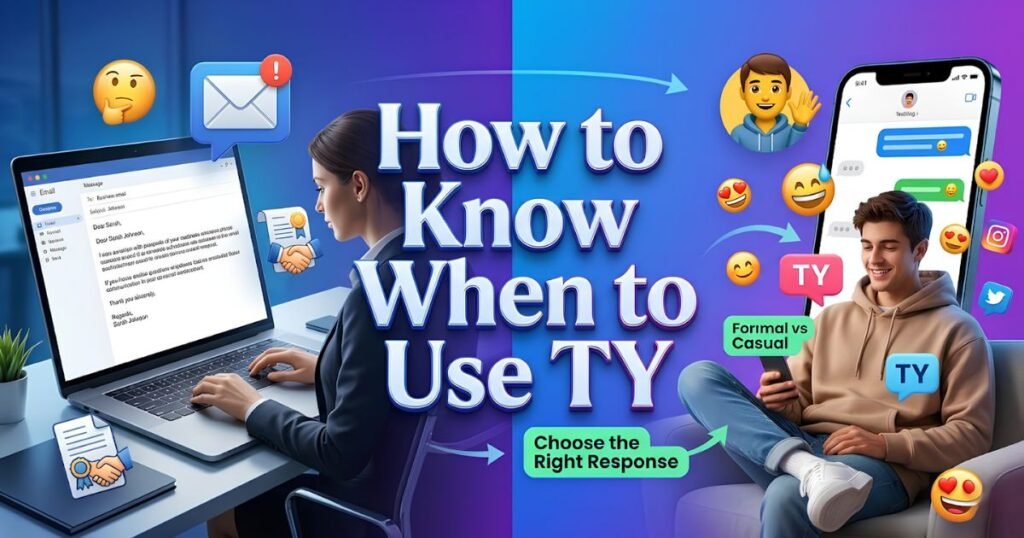
In formal communications, like emails or professional settings, consider the impact of brevity is a “TY” enough, or would a more thoughtful expression reinforce your gratitude? Pay attention to social cues; a simple “TY” might feel too casual in conversations where emotional support or deeper acknowledgment is necessary.
Knowing when to say “TY” hinges on recognizing the relationship dynamics and ensuring your message resonates appropriately in the moment.
Opt for “TY” in these situations:
- When responding to offers of assistance or sharing information.
- To show appreciation for gifts or kind gestures.
- For maintaining a friendly and respectful tone in casual conversations.
Refrain from using “TY” in these cases:
- In formal correspondence (instead, use “thank you”).
- To convey profound gratitude (try “TYSM” or a complete sentence).
- When communicating sarcasm (it could come off as insincere).
TY in Different Platforms
Digital communication, “TY” transcends mere abbreviation; it embodies a cultural signature across platforms. When asking “what does TY mean” in texts or DMs, it transforms from just a simple thank you to a linguistically charged tool for connection.
On platforms like Twitter, brevity is key, and TY becomes a badge of brevity, allowing users to express gratitude amidst character limits. The expression of gratitude varies by medium:
- Texting/SMS: A brief and informal acknowledgment.
- WhatsApp/Messenger: Frequently accompanied by emojis for a friendlier touch.
- Discord/Gaming: Courteous yet succinct, particularly in the midst of quick gaming sessions.
- Twitter/X/Instagram: Commonly appears in replies or comments, occasionally integrated into hashtags or casual threads.
- Email/Professional Chats: Less frequent; typically, a complete “thank you” is preferred unless using internal messaging tools like Slack.
ALSO READ: What Does NS Mean in Texts? Meaning, Examples & Usage Tips 2026
TY vs Other Thank You Abbreviations
The world of abbreviations, “TY” stands out as the go-to expression of gratitude. But what does “TY” mean in comparison to its counterparts like “TQ” (Thank You) or “THX” (Thanks)? The beauty of TY lies in its simplicity and versatility it’s universally recognized and effortlessly communicates gratitude in an increasingly fast-paced world.
This makes it a favorite among casual text conversations, quick emails, and social media posts, allowing users to express appreciation without missing a beat.
| Abbreviation | Meaning | Difference from TY |
|---|---|---|
| TY | Thank you | Basic, casual |
| TYSM | Thank you so much | More enthusiastic, stronger emotion |
| THX | Thanks | Informal, slightly less polite |
| TKS | Thanks | Casual or playful, less common |
| TYVM | Thank you very much | More formal or polite tone |
How to Respond to TY in Text
“TY” in a text, especially from a girl, it’s more than just a casual expression of thanks. What does TY mean from a girl? It can range from a simple acknowledgment to a signal that she values your effort, hinting at a deeper connection.
Responding to it thoughtfully opens the door to meaningful conversation. A quick “You’re welcome! Glad I could help” affirms her gratitude and reinforces your presence in her life.

When you receive a TY, there are several ways to reply based on the vibe:
Casual / Neutral:
- “Not an issue!”
- “My pleasure.”
- “Happy to help!”
Casual / Welcoming:
- “Absolutely!”
- “Glad I could assist!”
- “Not a problem at all!”
Lighthearted / Flirty (for friends):
- “Always here for you!”
- “LOL, thanks accepted!”
TY in Professional vs Casual Contexts
Saying thank you (TY) takes on a nuanced, strategic role. It transforms from a mere gesture into an essential tool for networking and relationship-building. When you express gratitude to a colleague or a client, you’re acknowledging their efforts; reinforcing positive interactions and fostering collaboration.
The opposite of TY in texts dismissiveness or neglect can lead to missed opportunities and strained relationships. In the corporate arena, a simple “thank you” can open doors, cultivate trust, and leave a lasting impression.
| Context | Recommended Usage |
|---|---|
| Work / Email | Opt for “thank you” or “thank you very much” instead of TY, as it can come across as overly informal. |
| Friends / Family | TY is suitable for quick responses among close ones. |
| Gaming | Use TY for brief expressions of gratitude during quick interactions. |
| Social Media | Combining TY with an emoji increases warmth and friendliness. |
TY With Emojis: Enhancing Meaning
The expression “TY” in text messages typically stands for “thank you,” but when paired with emojis, its impact can be significantly amplified. Think of how a simple smiley can transition a standard acknowledgment into a warm and heartfelt thanks.
A heart emoji can reinforce gratitude, while a thumbs-up takes it up a notch, adding a layer of positivity and affirmation that words alone might lack.
Incorporating emojis amplifies the emotional nuance:
- TY → Cheerful, light-hearted appreciation
- TY → Sincere gratitude
- TY → Chill, laid-back acknowledgment
- TY → Courteous, respectful expression of thanks
- TY → Profoundly moved or deeply grateful
Common Mistakes With TY
Common mistakes many people make with TY meaning is assuming it universally conveys gratitude in all contexts. While “thank you” is its primary translation, the tone and setting matter greatly.
Using “TY” in a formal business email may come off as too casual, potentially undermining the professional rapport you wish to maintain. It’s essential to gauge your audience before abbreviating your appreciation.
Steer clear of these errors:
- Excessive reliance on “TY”: This can come off as mechanical.
- Neglecting context: A simple “TY” may come off as curt without additional context.
- Employing “TY” in formal communications: It’s better to use “thank you” in professional emails or documents.
- Presuming universal understanding of “TY”: Some individuals unfamiliar with texting norms may not recognize it.
Cultural Notes on TY
TY, meaning in text, often carries layers of significance beyond its simple “thank you”. In today’s fast-paced digital landscape, it embodies a minimalist approach to communication stripping down expressions of gratitude to their essential form.
This brevity can symbolize the influence of youth culture, where efficiency and speed reign supreme. It also raises questions about authenticity: does a quick “TY” replace the warmth of a heartfelt thank you, or does it merely adapt to modern interactions?

The use of digital abbreviations such as TY demonstrates the quickness and emotional subtleties present in contemporary texting.
According to a language specialist:
“Using abbreviations like TY helps individuals stay courteous while making exchanges swift and amiable.”
This illustrates the impact of online culture on language, striking a balance between conciseness and emotional communication.
Real-Life Examples of TY in Texts
“What does ty mean texting” might seem like an uncomplicated query, its implications run deeper. In spaces like Twitter or Instagram, where every character counts, this abbreviation transforms interactions.
A follower thanking their favourite influencer with a “ty for the content!” not only acknowledges a specific post but strengthens the community bond, suggesting that every “ty” has the potential to spark further dialogue and engagement.
Casual Friend Chat
Casual friend chat, the nuances of slang can transform ordinary conversations into vibrant exchanges. Take “ty,” for instance, which stands for “thank you.” Using this abbreviation doesn’t just save time; it conveys a sense of familiarity and ease that deepens connections.
It’s a subtle reminder that in the fast-paced rhythm of digital life, even gratitude can be simplified, making interactions feel more authentic and grounded.
- A: “I got your coffee.”
- B: “Thanks a lot! You’re awesome!”
Gaming Chat
Interpreting phrases like “ty” can enhance your in-game strategies. Knowing that a player appreciates your teamwork can foster a more supportive environment, fueling collective achievements.
This emotional intelligence realizing what does “ty” mean from a girl opens doors to the subtleties of in-game interactions. It’s about the win; it’s about the relationships built along the way, transforming the gaming landscape into a thriving community of shared experiences.
- A: “I appreciate your protection during the match!”
- B: “No problem! I’m always here for you.”
Social Media Comment
A girl uses “ty” in a comment, it’s more than just shorthand for “thank you”; it’s a subtle cue embedded in the digital tapestry of social interactions. Deciphering this seemingly simple expression reveals layers of tone and intent.
It can signal appreciation, but context is everything. If she responds with “ty” to something meaningful, it might indicate that she values your effort or insight, suggesting a deeper connection.
- A: “I just posted about your content on Instagram!”
- B: “Thanks so much! It means a lot to me!”
ALSO READ: What Does IMK Mean in Text? Full Meaning Explained Simply 2026
Professional Slack Message
It’s essential to gauge the context of your conversation. In some circles, quick abbreviations like “ty” can create a sense of camaraderie, while in others, they may come off as unprofessional.
Contextual awareness transforms communication from mundane to engaging, showing you respect both the medium and your audience. Striking a balance between efficiency and professionalism ensures your messages foster positive interactions, encouraging openness and collaboration within your team.
- A: “I’ve attached the revised report.”
- B: “Thanks for sharing this!”
Advanced Tips for Using TY Correctly
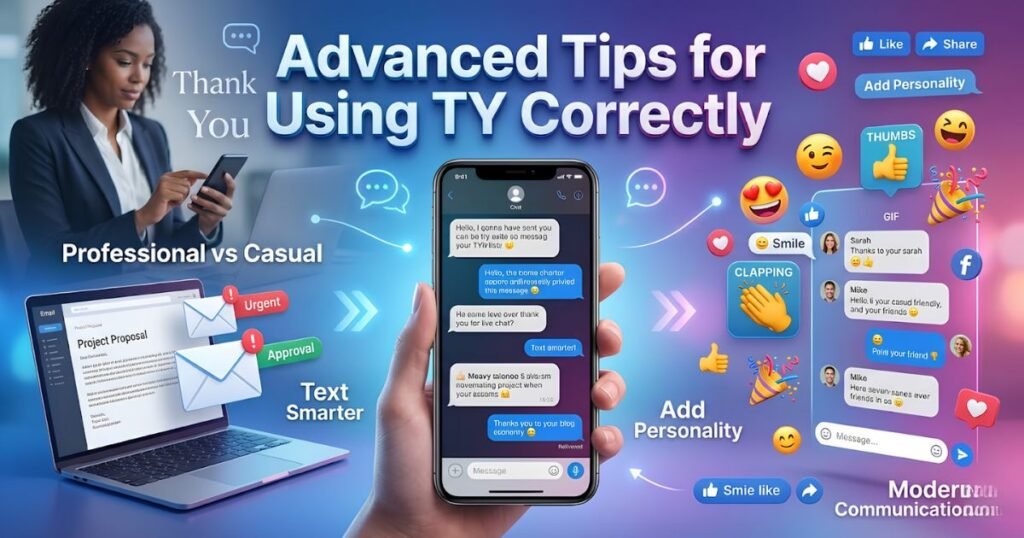
What do TY mean in text is just the beginning. To elevate your texting game, consider the nuances of context. Using “TY” in professional communication may come off as overly casual.
In such scenarios, opt for “Thank You” to maintain a level of professionalism while still being efficient. Don’t overlook the power of personalization. When texting a friend, “TY” can be infused with playful emojis or GIFs to enhance emotional warmth.
- Align your tone with emojis. While TY is neutral, adding emojis infuses warmth.
- Employ different variations for greater emphasis. Phrases like TYSM, TYVM, or TYIA express deeper appreciation.
- Think about your audience. Adjust your level of formality based on whether you’re messaging friends or colleagues.
- Pair it with text for added meaning. For example, “Thanks for your help! I truly couldn’t have done it without you.”
Fun Facts About TY
Texting, “TY” delivers more than just gratitude; it’s a gateway into the nuances of digital communication. The question “what does TY mean from a girl?” might lead you to think it’s simply an abbreviation for “thank you,” it carries layers of meaning based on context and relationship dynamics.
TY might be playful, showing light-heartedness, while in a more serious conversation, it could indicate appreciation for vulnerability or support.
- Abbreviated expressions of gratitude have been around since the 1990s with SMS.
- TY is now a globally acknowledged abbreviation, transcending various platforms and cultures.
- It’s frequently used alongside memes to add a humorous or playful touch.
- In gaming communities, using TY has become a standard courtesy in team communications.
FAQ Section
What does TY Stand for in Text?
TY stands for “Thank You.” It’s a quick and efficient way to express appreciation in text messages, chats, and social media. In today’s fast-paced communication, this abbreviation has become a staple for conveying gratitude without taking up much time or space.
What are the Common Text Abbreviations for 2026?
In 2026, text abbreviations are likely to evolve, but some common abbreviations will remain recognizable. “LOL” (Laugh Out Loud), “BRB” (Be Right Back), and “TTYL” (Talk To You Later) are evergreen favorites.
How to Reply to TY in Text?
“TY” (thank you), it’s a great opportunity to keep the conversation going or simply acknowledge their gratitude. You can reply with a friendly “You’re welcome!” or “No problem!” to show you appreciate their thanks.
How is TY Used in Text Messaging?
TY, short for “thank you,” is a popular abbreviation in text messaging. It allows for quick and efficient communication, especially in fast-paced conversations where every second counts.
Does TY Stand for Anything?
Yes, TY can stand for several things depending on the context. In the world of texting and social media, it commonly represents “Thank You.” This shorthand is widely used in messages to express gratitude quickly and casually.
Conclusion (Final Thoughts)
The meaning of “TY” in text conversations is essential for effective communication in our digital world. This abbreviation, which stands for “thank you,” embodies a blend of convenience and politeness that today’s fast-paced interactions demand.
Its various uses and contexts, it’s clear that mastering such shorthand can enhance connections with friends and colleagues alike. Embracing these quick expressions helps us stay relevant and engaged in online conversations.