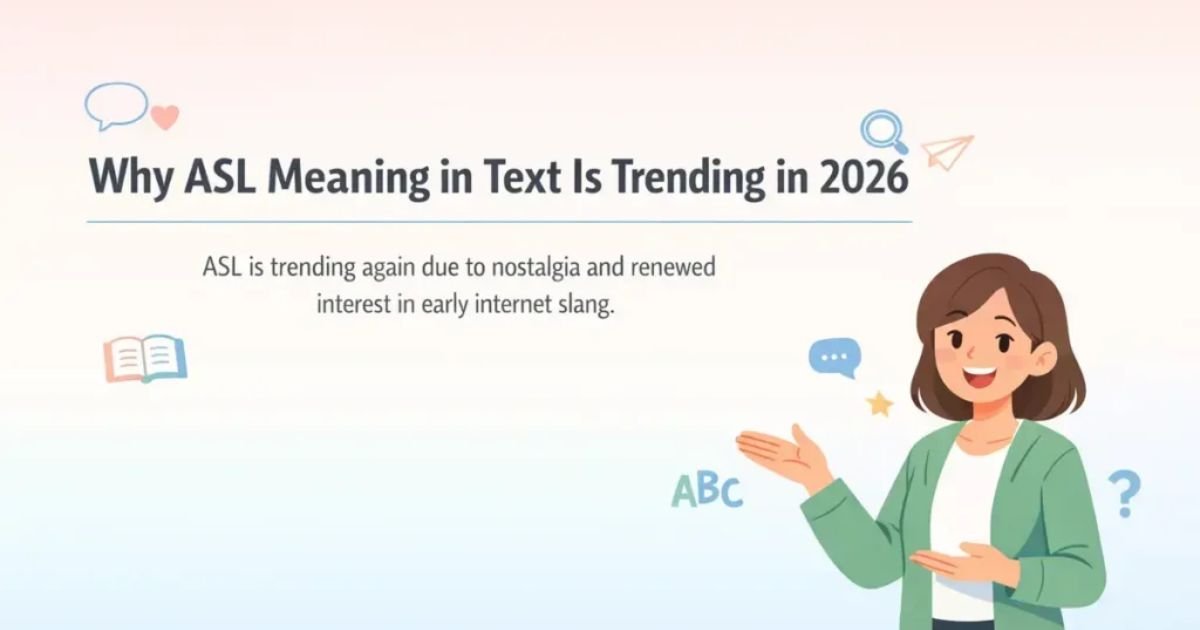
What Does ASL Mean in Text? The Complete Guide to Online Slang 2026
Did you know that ASL is a language for the deaf, and a popular acronym in the world of online communication? What ASL mean in text is crucial for deciphering conversations in today’s digital landscape.
Whether you’re a seasoned text talker or a newcomer to online slang, knowing this term can enhance your communication skills and social interactions. We’ll explore the various meanings and uses of ASL in texting, equipping you with the knowledge to navigate modern conversations seamlessly.
READ MORE: What Does DP Mean in Text? Full Meaning Explained Simply 2026
The Primary Meaning: ASL = Age, Sex, Location
The primary meaning of ASL Age, Sex, Location might initially seem straightforward, but it evokes a deeper context in the digital age, particularly in online interactions. The acronym serves as a quick gateway into understanding someone’s basic identity, often used on chat platforms to facilitate immediate connection.
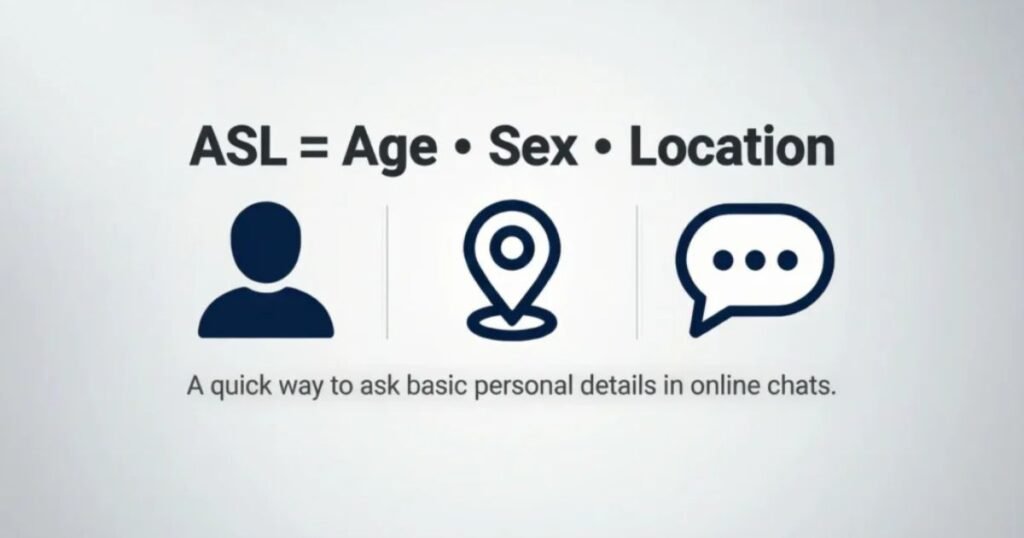
In the realm of texting and online communication, the most recognized interpretation of ASL mean in text is “Age, Sex, Location.” This acronym gained traction in the late 1990s and early 2000s, particularly on platforms such as AOL Messenger, Yahoo Chat Rooms, and MSN.
It served as a quick and efficient way to introduce oneself in online interactions without lengthy preambles.
For example:
- User A: “Hi there!”
- User B: “Hello! What’s your asl?”
- User A: “22/F/California”
“22/F/California” conveys that the person is 22 years old, Female, and hails from California. This concise format was effective in facilitating conversations among online users.
READ ALSO: What Does STSU Mean in Text? Full Explained Guide 2026
Why People Used ASL in Chats
ASL in chats has become a vibrant trend, reflecting the dynamic evolution of digital communication. First and foremost, incorporating ASL meaning in slang allows users to convey nuanced emotions and complex concepts succinctly, bridging the gap between verbal and nonverbal communication. A simple hand sign can encapsulate a whole sentiment in a world that often celebrates brevity.
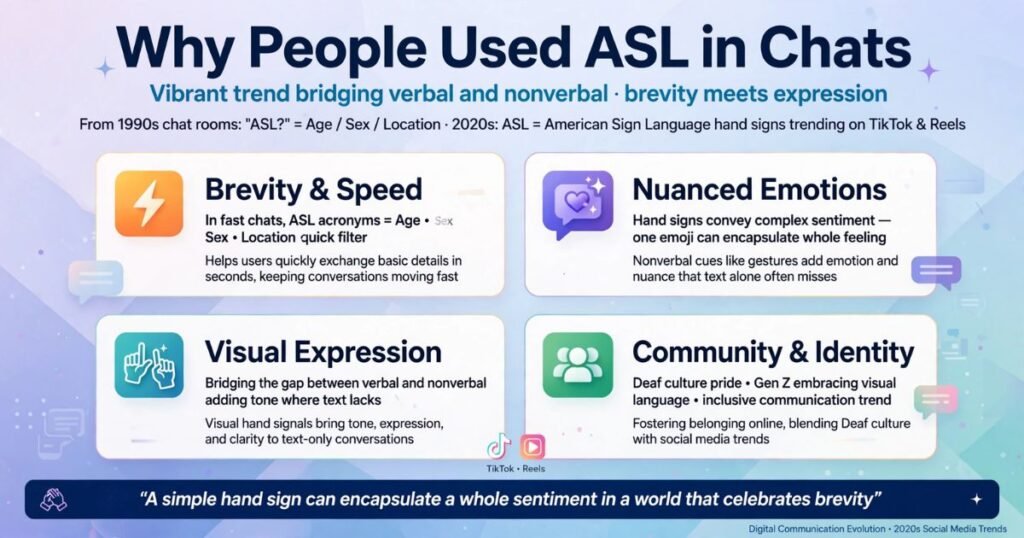
In the early days of online communication, there were no profiles, images, or personal descriptions. Individuals interacted with unfamiliar users in chat rooms without knowledge of their identities. The inquiry “ASL?” became a straightforward way to ask:
- What is your age?
- Are you a man or a woman?
- What is your location?
Although it seems straightforward, this question played a vital role in helping users determine whether to continue the conversation. In the current age of social media, where profiles provide extensive information, the term ASL mean in text is less prevalent in the same context but still surfaces in lighthearted or nostalgic discussions.
READ MORE: What Does LCR Mean in Text? Simple Meaning, Uses, and Examples 2026ASL in Modern Texting: How It’s Used Today
ASL, or American Sign Language, has seamlessly woven itself into the fabric of modern texting culture, transforming how we communicate in a digital age. From simple gestures to elaborate signs, ASL continues to evolve, inspiring a unique range of ASL mean in text slang that brings depth to our everyday messages.
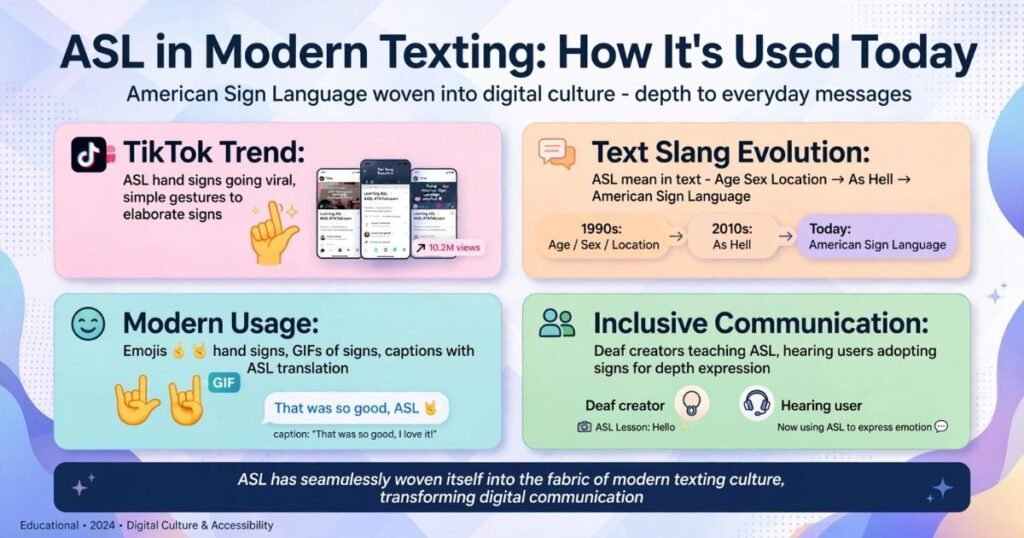
The sign for “thank you” can morph into a quick emoji a nod to its physical counterpart but with layers of meaning that reflect the signer’s emotions and intentions. In today’s digital communication, ASL has evolved to represent various meanings based on the situation. Here’s how it’s interpreted:
| Context | Meaning | Example Use |
|---|---|---|
| Online Chatting | Age, Sex, Location | “asl?” = inquiry about basic info |
| Education/Disability | American Sign Language | “I’m studying ASL at university.” |
| Slang Expression | As Hell | “I’m tired asl” (implying very tired) |
| Gaming/Online Forums | Any Slang Variation | “That was funny asl” |
The Rise of ASL as Slang (“As Hell”)
ASL, initially recognized as “American Sign Language,” has taken on a vibrant new identity in the digital lexicon, representing “as hell.” This evolution reflects the adaptability of language in our fast-paced, internet-heavy culture.
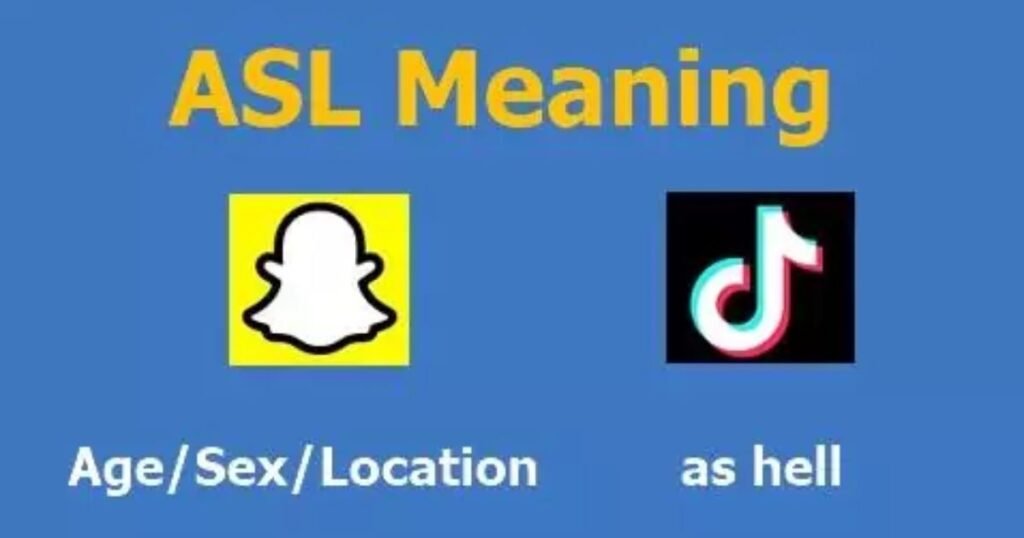
By adopting ASL as slang, users channel a casual tone that resonates deeply within social media platforms and everyday conversations. The phrase offers a punchy, relatable way to amplify sentiments think of it as a modern exclamation point. In today’s digital landscape, particularly among Gen Z and TikTok users, ASL has evolved into a popular shorthand for “as hell.”
This expression is often employed to amplify emotions or descriptions, such as:
- “That outfit is cute asl” translates to “That outfit is cute as hell.”
- “I’m sleepy asl rn” means “I’m really sleepy at the moment.”
- “She’s funny asl” conveys “She’s extremely funny.”
This trend gained traction around 2018 and has since surged on social media platforms, where quick and concise messaging prevails.
ALSO READ: What Does FS Mean in Text? Full Meaning, Chat Uses & Examples (2026)
ASL vs. ASL (American Sign Language)
ASL as both a language and a cultural hallmark offers deeper insights into its significance. While many might recognize “ASL” in a casual texting context as “age, sex, location,” the richness of American Sign Language encompasses far more.
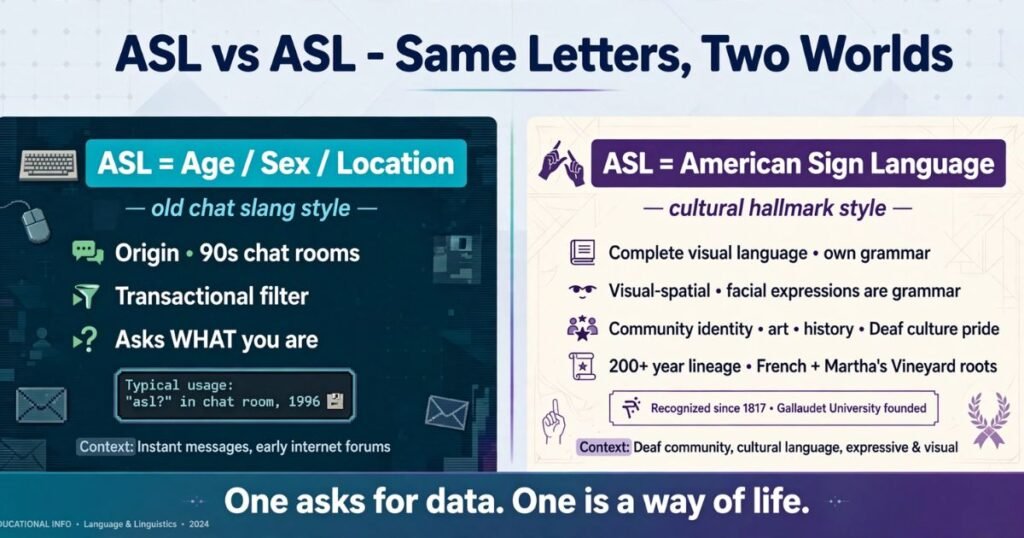
ASL mean in text serves as a crucial medium through which the Deaf community communicates, expressing emotions, identities, and experiences unique to their lives. Texting slang, ASL also stands for American Sign Language a fully developed visual language used by the Deaf and Hard-of-Hearing community across North America.
Essential Information about American Sign Language:
- It functions as a complete language with unique grammar and syntax, rather than being just a collection of gestures.
- More than 500,000 individuals in the U.S. and Canada primarily communicate using it.
- ASL is frequently offered in educational institutions as a foreign language option.
In specific contexts, when someone states:
- “I’m learning ASL,”
- they are typically referring to American Sign Language, not “Age, Sex, Location.”
Observing context and capitalization can guide your understanding.
- lowercase “asl” → generally refers to slang (“as hell”)
- uppercase “ASL” → denotes formal terms (“Age, Sex, Location” or “American Sign Language”)
How to Know Which ASL Someone Means
The abbreviation “ASL” in text conversations, it’s crucial to discern the context to understand its meaning fully. While many people initially associate ASL with American Sign Language, in the digital realm, it often stands for “age, sex, location.”
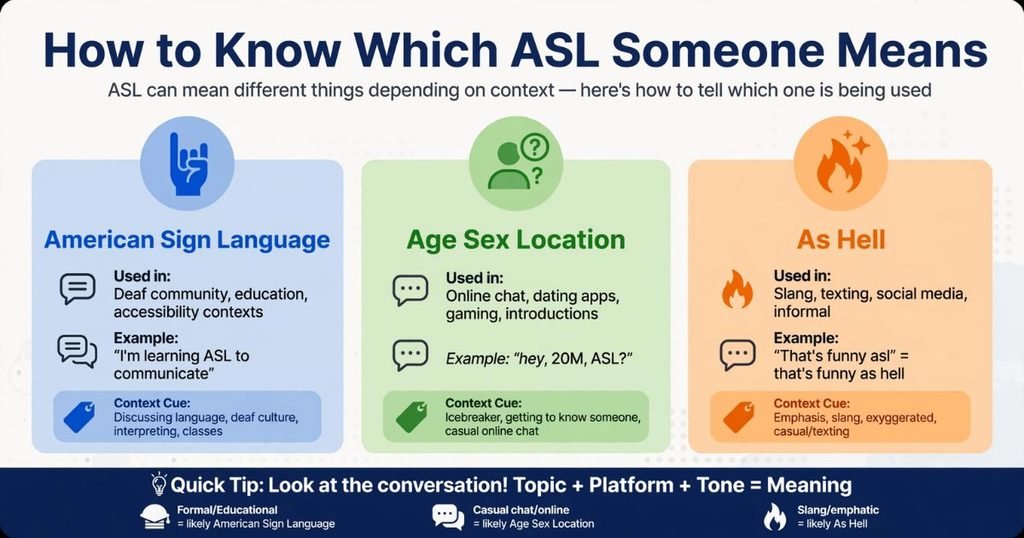
This playful inquiry has its roots in early online chatrooms, where users sought to establish rapport by sharing basic personal details. To decipher the intended meaning, pay attention to the tone of the conversation and the nature of your relationship with the person asking.
To determine what ASL mean in text, pay attention to the surrounding context:
- If it appears at the beginning of a chat, it typically stands for “Age, Sex, Location.”
- When it’s included in a sentence conveying a strong feeling, it means “as hell.”
- If found in an educational or accessibility discussion, it signifies “American Sign Language.”
Here are some examples:
- “ASL?” → inquiring for details
- “I’m hungry asl” → informal way to say “as hell”
- “I’m studying ASL.” → referring to American Sign Language
READ MORE: TS Meaning in Text: Definition, Uses, and Examples (2026)
The Cultural Evolution of ASL
American Sign Language (ASL) has undergone a remarkable cultural evolution, transcending its roots as a simple means of communication. Originally developed in the early 19th century, ASL has blossomed into a rich linguistic tapestry, embodying the experiences and identities of the Deaf community.
What does ASL mean in text? It symbolizes empowerment, bridging gaps between cultures and elevating the narrative of Deaf individuals who have often been marginalized. Language, particularly online slang, changes rapidly. A prime example of this is ASL.
- In the 2000s, it was interpreted as “Age, Sex, Location.”
- By the 2010s, its usage declined since social media profiles started sharing personal details more openly.
- In the 2020s, ASL reemerged with a new meaning — “as hell” — and became a popular expression among Gen Z.
Common Misunderstandings About ASL
One common misunderstanding about American Sign Language (ASL) is that it’s merely a signed version of English. ASL is a fully developed language with its own grammar, syntax, and cultural nuances.
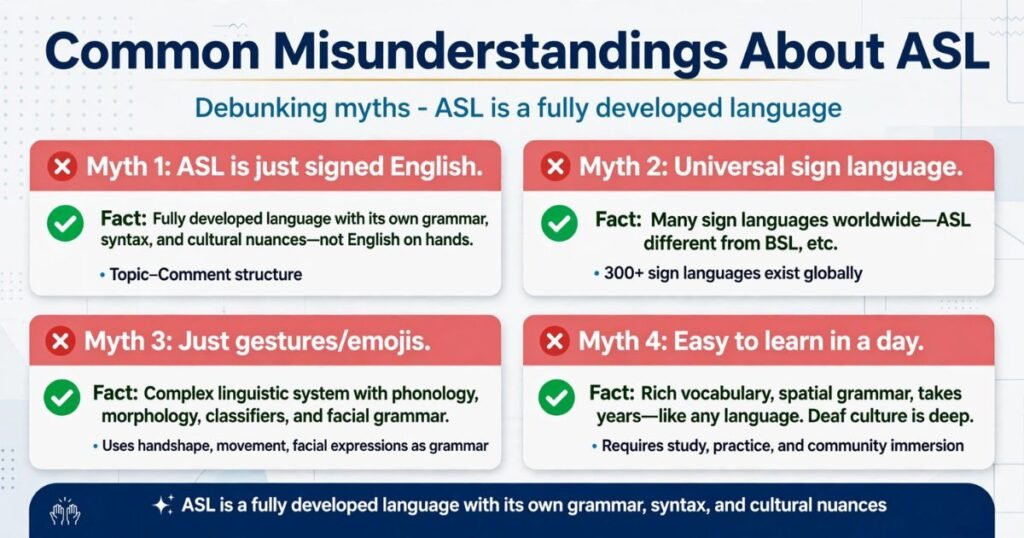
Misconceptions arise when people assume they can directly translate English phrases into signs, overlooking the rich contextual layers of meaning embedded in ASL. Due to the diverse meanings associated with ASL, misunderstandings frequently arise, particularly between different age groups.
For instance:
- A parent sends a message: “What does ASL stand for?”
- Teen: “As hell.”
- Parent: “Huh? What does that mean?”
READ MORE: What Does TS Mean in Texting? Full Slang Meaning Explained (2026)
Is ASL Still Used to Ask Age, Sex, Location?
“ASL” once reigned supreme as an abbreviation for age, sex, and location a quick way to gauge potential online interactions. As communication styles have evolved, so has the relevance of ASL slang. While the acronym lingers in various corners of the web, it often feels like a relic of early chat room nostalgia rather than a necessity in contemporary dialogue.
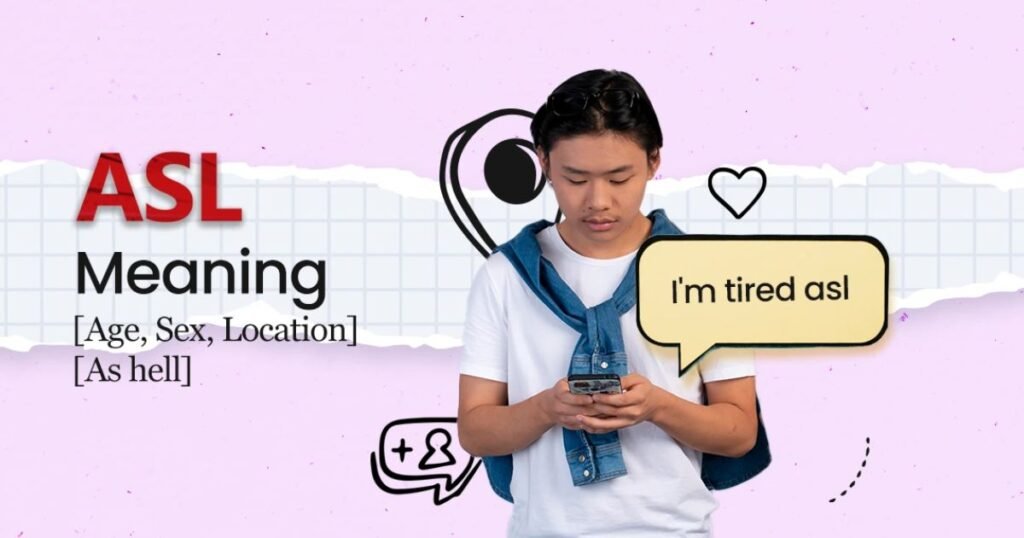
Modern conversations prioritize more meaningful interactions, often favoring nuanced questions over simplistic demographics. Platforms like social media have shifted the focus away from basic identifiers, inviting users to share stories, interests, and experiences instead.
The term “ASL?” may feel outdated or even raise eyebrows, particularly on today’s platforms where privacy is a priority.
As an alternative, many opt for friendlier and more open-ended inquiries such as:
- “What’s your hometown?”
- “If you’re comfortable sharing, how old are you?”
- “Can you share a bit about yourself?”
You can read also: SMD Meaning in Text : Full Form, Slang Uses & Social Media Meaning 2026
Other Popular Slang Related to ASL
The world of American Sign Language (ASL), it’s fascinating to see how its unique lexicon has inspired a myriad of slang terms. “deaf” has taken on a completely new meaning within the ASL community often used as a descriptor, and a badge of honour among signers.
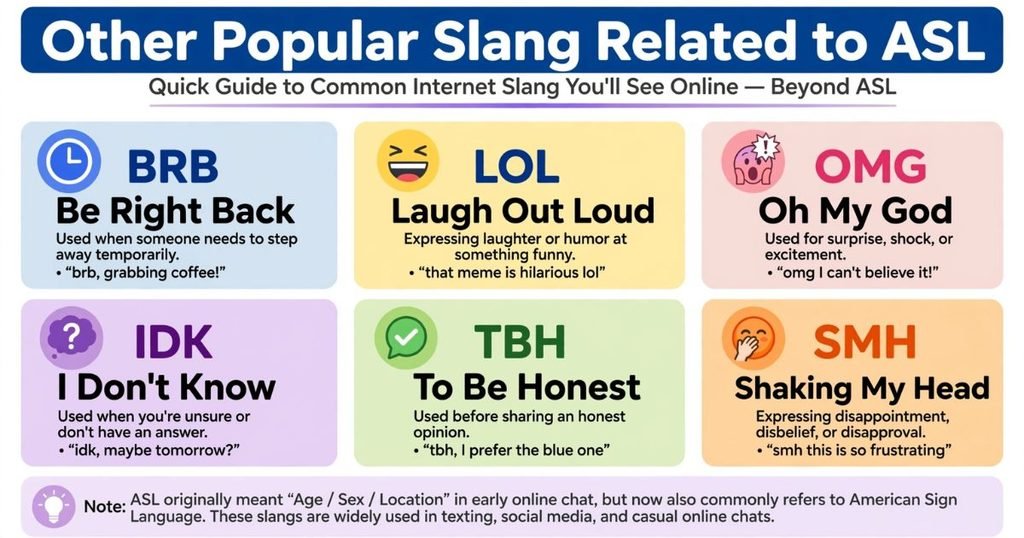
Another popular slang is “ASL,” which stands for “age, sex, location” in online chat, but in the deaf community, it resonates with a far richer context. It can also imply a request for connection or understanding, available only through the nuances of signing.
To assist you in navigating online slang, here are some phrases frequently encountered alongside ASL:
| Slang | Definition | Example |
|---|---|---|
| LOL | Laugh Out Loud | “That was hilarious, lol!” |
| BRB | Be Right Back | “One moment, brb!” |
| LMAO | Laughing My A** Off | “I can’t stop laughing, lmao!” |
| FR | For Real | “That’s definitely true, fr.” |
| TBH | To Be Honest | “Honestly, I really liked it, tbh!” |
| IDK | I Don’t Know | “I’m not sure what to do, idk.” |
| BTW | By The Way | “By the way, awesome picture!” |
Expert Insight: The Linguistic Side of ASL
American Sign Language (ASL) operates on a complex linguistic framework that transcends mere gestures, embodying a rich vocabulary and intricate grammar. Unlike many spoken languages, ASL employs spatial relations where the placement of signs within a three-dimensional space conveys meaning.
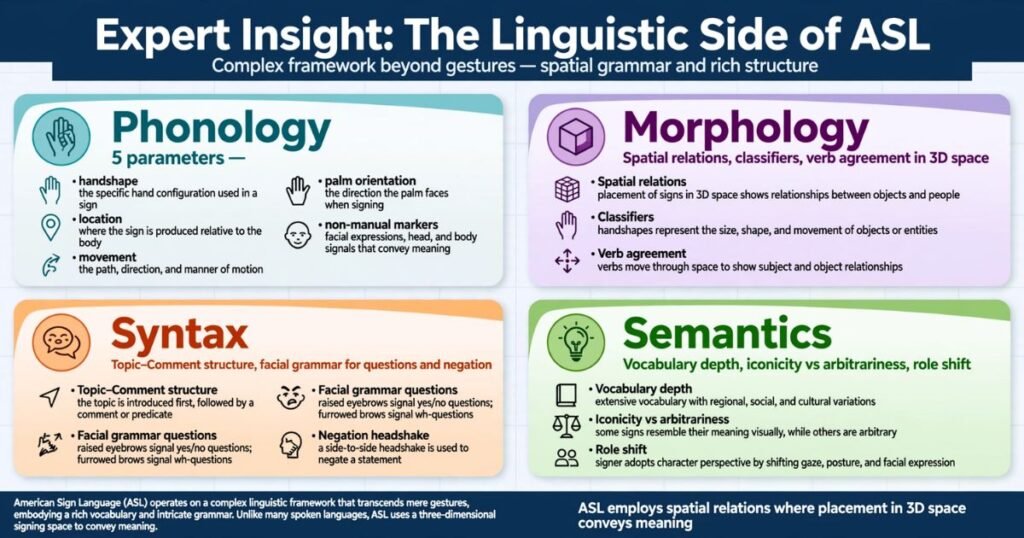
This use of space allows signers to express nuanced information, such as who is speaking or the relationship between subjects, all without the need for additional words. Examining ASL through a linguistic lens reveals how digital communication condenses messages without sacrificing their meaning.
As individuals seek quick and expressive ways to communicate, they often abbreviate words while conveying feelings using emojis, punctuation, and contextual cues.
A sociolinguist noted:
“Internet slang isn’t a threat to language it demonstrates how language evolves with technological advancements.”
ALSO READ: What Does ACC Mean in Text? Full Meaning Explained (2026)
How to Use ASL Naturally in Your Own Texts
American Sign Language ASL mean in text, start by weaving in visual descriptions of signs rather than merely naming them. Instead of saying “the sign for ‘family’ is made by opening your hands in front of your face,” you might say, “imagine gathering everyone close to your heart; that’s the essence of ‘family’ in ASL, expressed through embracing gestures.”
Employ the term “asl” (as hell) when conveying emotions or emphasizing a point:
- “That film was dull asl.”
- “This pizza is amazing asl.”
Steer clear of using “ASL” (Age, Sex, Location) with people you don’t know, as it may come off as old-fashioned or intrusive.
When discussing the language, use “ASL” (American Sign Language):
- “I’m enrolling in ASL classes next term.”
Remember this simple guideline:
- Lowercase “asl” = informal slang.
- Uppercase “ASL” = abbreviation
Tips to Avoid Miscommunication Online
One effective strategy to avoid miscommunication online is to utilize clear and concise language. When using acronyms or slang, such as “asl” mean in text “age, sex, location,” ensure that your audience is familiar with the terms.
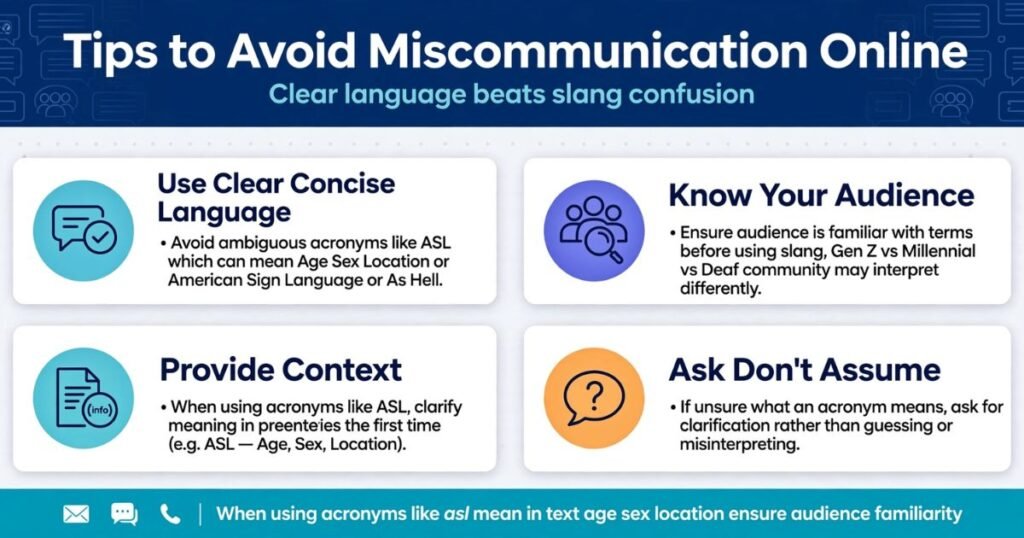
Your message may become muddled, leading to confusion. As slang evolves rapidly, consider including a brief explanation of less common phrases in your communication, which fosters understanding and inclusivity.
- Be mindful of tone and context.
- If you’re uncertain, don’t hesitate to ask politely. (“Could you clarify what ASL means in this context?”)
- Avoid assuming that previous meanings are still relevant.
- Incorporate emojis to convey tone; they help clarify your intentions!
- Keep abreast of changes. Internet slang evolves rapidly, so current trends may change quickly.
READ ALSO: What Does GTS Mean in Text? (2026 Updated Guide + Examples)
FAQs About ASL in Text
What does ASL mean in Slang 2026?
In slang, “ASL” has evolved beyond its original meaning of “age, sex, location,” which was commonly used in online chats and forums. As of 2026, people often use “ASL” humorously to refer to things like “as seen live” or in a more playful context, indicating authenticity or realness in interactions.
What does ASL mean in Online Slang?
In online slang, “ASL” stands for “age, sex, location.” It’s often used in chat rooms and social media to quickly gather personal information about someone a user is chatting with.
What does “ASL” mean in Gen Z Texting Slang?
In Gen Z texting slang, “ASL” stands for “age, sex, location.” It originated in online chat rooms as a way to quickly gather basic information about someone during conversations.
What does ASL Stand for in Internet Slang?
In internet slang, ASL stands for “Age, Sex, Location.” This acronym is often used in chat rooms and online conversations, especially in the context of meeting new people or engaging in casual exchanges.
What is ASL in Chatting Online?
ASL in online chatting typically stands for “Age, Sex, Location.” It is a common acronym used in chat rooms and instant messaging to prompt users to share their basic demographic information, allowing for a more personalized conversation.
Conclusion (Final Thoughts)
The abbreviation “ASL” mean in text and its evolving meanings in online communication is essential for navigating the digital landscape effectively. With its origins rooted in American Sign Language and its popular use in messaging as an acronym for age, sex, and location, ASL showcases the dynamic nature of internet slang.
As digital communication continues to evolve, keeping up with such terms is crucial for seamless interactions. By familiarizing ourselves with these acronyms, we enhance our conversations and connect more deeply with others in the online realm. Stay informed and ensure you’re always in the know by exploring more digital slang!